
Case study — Retail & brands — Original · 11 min read · 5 questions
Why the sneaker market collapsed
By Yishan Lin · Aired · Published
The thesis
The standard explanation for the sneaker crash is taste. Jordans went out of style, Nike flooded the market, the kids moved on. That is revenue read backwards. What actually happened is simpler: between 2020 and 2022 the country was handed stimulus checks, PPP money, and $600 a week on top of unemployment, and a lot of it landed on a $500 sneaker. Stores in Los Angeles were doing $50,000 a day, thousands of shops opened, and average resale ran $400 to $500.
Then it stopped, and the shops that had matched the boom in payroll and inventory were holding shoes worth less than they paid. Average resale is now $200 to $250, and the bagholders dumping stock to cut losses push it down further. Nike's own response — mass production, fewer quick strikes, direct-to-consumer — removed the scarcity the entire resale layer was built on, which hurts the resellers, the boutiques, and Foot Locker at once.
What survives is expertise, and it is the least transferable asset in retail. A new sneaker caps at 20–25% margin because StockX sets the price for everyone. A used one has no fair market price at all, which is where the 50% margins are — and pricing it means knowing in seconds what heel drag, a missing box, and a size 16 do to the number. Neither owner in this episode has any of it written down. That is why one runs a 25% store margin against Foot Locker's 6%, and why the boom minted thousands of stores and left almost none.
How do you think about this? 5 strategy questions this case raises and does not answer.
Answer them below
By the numbers — swipe or use arrows
Nike and adidas annual footwear revenue from company 10-K and annual reports for the years shown; store-level revenue, average order value, sales mix, product margins, rent, payroll, and operating margins for Courtside Hollywood and Legacy Sneaker Boutique disclosed on camera by their owners; comparative average store earnings and operating margins for Foot Locker, JD Sports, Shoe Carnival, Dick's Sporting Goods, Stadium Goods, and Nordstrom derived from company filings and store counts for the years shown; unit volumes before store opening are the owner's own count
© Modern MBA. Quote and cite with credit and a link; republishing needs permission.
Key takeaways
The boom was real before it was a bubble. Nike footwear went $10.3B, $13.4B, $16.2B, $19.9B, $22.3B, $24.2B across the 2010s while adidas went $4.1B to $12.1B. Sneakers had turned from low-margin apparel into high-margin assets that appreciated on the shelf.
What followed was liquidity, not fashion. One owner went from 40 pairs a year in 2018 to 500, 1,500, 3,000, 5,000, and 8,000 by 2023 — the steepest part of that curve lands exactly on stimulus checks, PPP, and the $600 unemployment top-up.
Average resale ran $400 to $500 a pair at the peak and is $200 to $250 now. Nothing about the shoes changed. The money did.
New sneakers cap out at 20–25% gross margin because StockX publishes the price. There is no equivalent index for used, which is why pre-owned runs 50% — the entire edge is that no one agrees what a worn shoe is worth.
That edge is unwritten. Condition, star loss, heel drag, fading, original box, extra laces, insoles — and the fact that Air Maxes and Jordan 3s crumble over time, which kills their future resale. A 10 to 10.5 is the most common size in North America; a 6 or a 16 is worth less for no reason other than the market for it.
The box alone can be $200 to $300 of the price. Someone spending $150 does not care. Someone spending $2,000 is buying the whole artifact.
Courtside Hollywood opened in October into the downturn and grosses about $120,000 a month, an annual run rate of $1,400,000 — against $1,924,700 for the average Stadium Goods, $2,675,000 for Foot Locker, $2,645,000 for Shoe Carnival, and $2,789,000 for JD.
It clears less revenue and keeps far more of it. Store-level operating margin is 25% against 6% at Foot Locker, 8% at Shoe Carnival, 10% at Dick's, and 5% at JD. The chains sell what everyone else sells at a price everyone can check.
The mix is where the margin comes from: 40% new sneakers, 20% pre-owned sneakers, 25% new apparel, 15% pre-owned apparel. Apparel earns 10–20% more than shoes because customer knowledge is lower and the arbitrage is wider.
He also refuses wholesale. A brand contract means taking the models you are allocated, and being stuck with inventory you cannot move is the opposite of a business whose whole moat is knowing exactly what sells.
On the other coast, Legacy's King of Prussia store grossed $11,000,000 in 2021 — against $2,459,000 for the average Foot Locker, $2,955,000 for Stadium Goods, $2,978,000 for Shoe Carnival, and $4,421,000 for JD. That is what the peak looked like from inside a mall.
Two years later the Manhattan flagship across from the Empire State Building grossed $7,000,000. Still multiples of any chain store, and still a fall, with Saturdays running $10,000 where they used to run $20,000.
Scale at that size runs on consignment, which is a different business. Legacy takes 20% of a consigned sale — $60 on a $300 shoe against $100 if it owned the pair — and after card fees and 1% staff commission the real number is 16%.
That trade-off decides the break-even. At 100% store-owned inventory and a 30% margin the Manhattan store needs $513,333 a month. At its actual 75% consignment mix it needs $750,000. At 100% consignment it would need $962,500 — against rent of $104,000 and payroll of $50,000 a month.
Consignment buys inventory it would never buy with cash — 15,000 to 17,000 units, including shoes that take a year to move but cost nothing to hold — at the price of control, since the consignor sets the price and over 100 people are on the waiting list to get in.
New episodes
Don’t let an algorithm decide what you get to see.
Get an email the moment a new episode drops, with commentary that never made the final cut.
Common questions
Why did the sneaker resale market crash?
Because the money that inflated it was temporary. Between 2020 and 2022 stimulus checks, PPP loans, and a $600-a-week unemployment top-up put unusual amounts of discretionary cash into an audience that spent it on sneakers. Stores in Los Angeles were doing $50,000 to $60,000 a day, thousands of new shops opened, and average resale prices ran $400 to $500 a pair. When that money stopped, the shops that had matched the boom with payroll and inventory were left holding stock worth less than they paid, and the resellers dumping it to cut losses drove the market down further. Average resale is now $200 to $250. Taste changed after the money did, not before.
Is Nike responsible for the collapse in resale value?
It contributed. Nike spent years trying to defeat resellers by mass-producing retros, cutting back on quick strikes and limited releases, and shifting allocation from Foot Locker and JD toward its own direct-to-consumer channel. That removed the scarcity the entire resale layer depended on. The effect was broader than intended: retros that used to sell out on release day now sit on shelves and get marked down, which hurts the big-box retailers, and boutiques cannot stock what is still available everywhere else because their whole proposition is having what is sold out. Resellers, retailers, and Nike's own brand strength all took the hit.
How do sneaker resellers actually make money?
On used shoes, not new ones. A new pair is capped at roughly 20–25% gross margin because StockX publishes a fair market price everyone can look up. Pre-owned has no index at all, so pricing is judgment, and that is where 50% margins live. The judgment is specific: condition, star loss, heel drag, fading, whether the original box, laces, and insoles are there, whether the model crumbles with age like Air Maxes and Jordan 3s, and how common the size is — 10 to 10.5 is the deepest market in North America. Both owners in this episode price from memory in seconds, which is the actual moat.
Is owning a sneaker store profitable?
It can be far more profitable than a chain, at much smaller scale. Courtside Hollywood grosses about $1.4 million a year against $2.6–2.8 million for the average Foot Locker, Shoe Carnival, or JD store — but its store-level operating margin is 25% against 6%, 8%, and 5% at those chains. Legacy's Manhattan store runs 24% on $7 million. The margin comes from pre-owned inventory and apparel, both of which the chains largely do not touch, and from refusing wholesale contracts that would force unsellable models into the store.
How does sneaker consignment work?
The consignor owns the shoes and sets the price; the store provides the floor, the customers, and the paperwork and takes a cut on sale. Legacy takes 20%, which is $60 on a $300 pair against the $100 it would make owning the shoe outright, and after credit card fees and 1% staff commission the net is closer to 16%. The upside is filling 15,000-plus units of shelf space with no cash outlay, including odd inventory a store would never buy. The downside is margin and control: consignors can price too high, which makes the store look like it is gouging, and shelf space gets used as a storage unit. Most independents avoid it for exactly those reasons.
Where does the money go if not into the store?
Increasingly, to people who never touch the shoes. Teenagers running Discords, bots, and add-to-cart systems charge a fee to cop for other people, take no inventory risk, pay no rent and no payroll, and can clear six figures in a month from a computer. The store owners with six-figure monthly overhead are explicit that this is the better business. What the physical store buys is longevity and the trade-in loop — customers can try, buy, and sell within minutes — which no Instagram account replicates.
Discussion
The standard explanation is taste — Jordans went out of style, the kids moved on. The case calls that revenue read backwards. What is the difference between an explanation and a rationalization, and how would you tell in real time?
No answers yet — be the firstStimulus checks, PPP money, and $600 a week landed on $500 sneakers; LA stores did $50,000 a day. When demand is visibly funded by a temporary transfer, what should an operator do with the windfall?
No answers yet — be the firstShops matched the boom in payroll and inventory and were left holding shoes worth less than they paid. What is the discipline that prevents that, and why does almost nobody have it?
No answers yet — be the firstAverage resale halved. Who ends up carrying the loss in a resale market, and is that who took the risk?
No answers yet — be the firstYou ran a store through the boom and survived. What business are you in now, and does it still involve sneakers?
No answers yet — be the first
Related case studies
 Retail & brandsHow Yeezy and UltraBOOST saved AdidasThree failed five-year strategies, then one year that produced UltraBOOST, NMD, and Yeezy together.10 min read
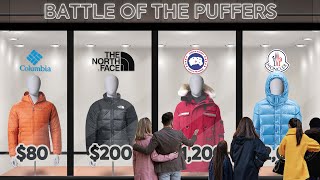 Retail & brandsHow a $1,000 jacket became a luxury brandCanada Goose built a real luxury brand in ten years. The margins prove it. The share price says it may not matter.14 min read
 Retail & brandsWhy gun prices make no senseThe most lucrative consumer market in America is also the only one with no prices, no ads, and no data.16 min read